A day around Lake Bafa and the Latmos landscape is best planned with breathing room. The lake, rocky terrain and traces of human history belong to the same wider Aegean setting, but they reward different kinds of attention. Start by choosing only a few stops. Check current access and travel times locally, especially if you intend to walk beyond a short viewpoint visit. Then leave space between those stops. A packed itinerary can make the area feel like a detour; a slower one lets the landscape become part of the story. Three practical checks before you go: 1. Confirm the route and current access for the places you want to see. 2. Allow enough time for the lake and the surrounding rock landscape instead of treating either as a photo stop. 3. Keep the plan flexible for weather, walking pace and local conditions. For more ideas on this region and other journeys through Türkiye, explore CREAOS Travel's Info & Guides: https://creaostravel.com/en/info-guides/ A thoughtful travel...
Many Cappadocia itineraries collect valley names quickly. Love Valley and Devrent are more memorable when you give each one a different question. At Love Valley, ask how distance changes the scale of the tall rock pillars. At Devrent, ask why one person sees an animal in a formation while another sees something entirely different. Both experiences are shaped by erosion, but the pleasure of visiting them lies in paying attention rather than finishing a checklist.
Start with scale at Love Valley
A distant viewpoint can make a group of columns look tightly packed. Move to another permitted viewing point or follow an established path, and the gaps and individual shapes become easier to read. A short, unhurried visit may reveal more than a rapid circuit of photo stops. Choose a walking distance that suits everyone travelling with you and follow current local signs; an old route description cannot tell you what the ground or access will be like on your day.
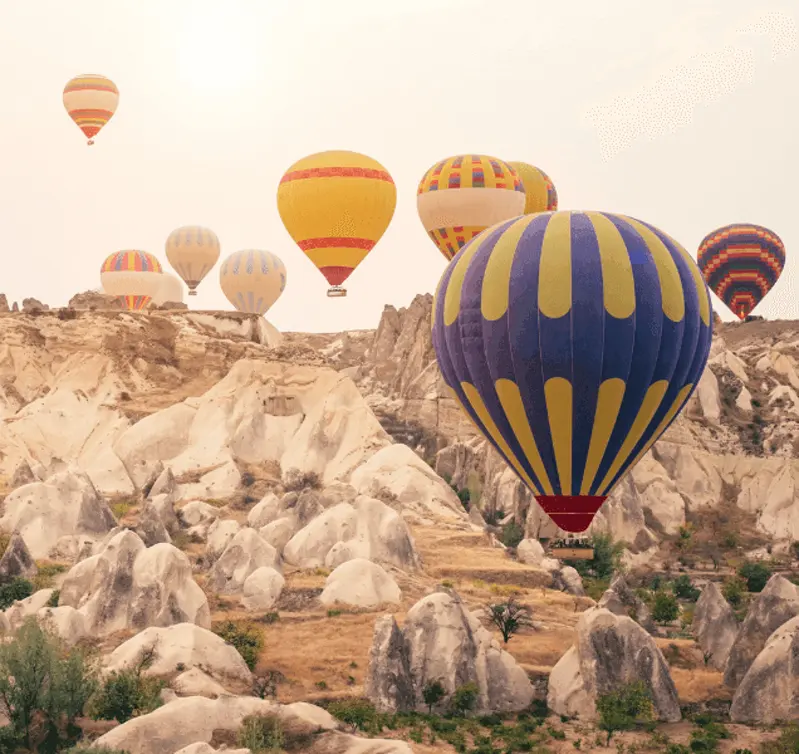
Photography is best treated as a response to the conditions you find. Side light may emphasise edges and shadows, while a cloudy day can bring out surface texture. Neither weather nor balloon flights can be promised. If a particular photograph is important to you, leave room in your plans for changing light and keep well back from exposed edges.
Let Devrent be playful
Devrent is often introduced through formations that resemble familiar creatures, including a camel-like outline. These are interpretations, not a fixed catalogue of sculptures. Try viewing the same cluster from more than one safe position, then ask a companion what they notice. The conversation can be more rewarding than hunting for a single named shape.
That playful way of looking still calls for care. Stay within permitted areas and avoid climbing on fragile surfaces to improve a camera angle. A photograph should not come at the cost of the landscape that made it possible.
Plan the journey, not only the stops
Before choosing a guided day, decide whether you want a viewpoint visit, a gentle walk or more time to study the landscape. A tour may mention several locations without spending equal time at each. CREAOS Travel’s Cappadocia Green Tour lists Love Valley and Devrent among its stops, along with other places in the region. Ask the team to confirm the route, walking expectations, admissions and time at your priority stops for your travel date. A list on a page is a starting point for a conversation, not a fixed promise.
For a broader choice of journeys, compare the Cappadocia destination guide. It helps you decide whether a single day or a longer route better matches what you hope to see. Comfortable shoes, water and season-appropriate sun protection are sensible preparations, but conditions and access should be checked close to departure.
Take home a difference you can describe
One valley may stay with you through the space between its tall pillars; the other through a small formation that prompted two different stories. Keep the location of your own photographs accurate. A generic Cappadocia image should not be labelled as a particular valley unless you know where it was taken. That simple honesty also makes your travel notes more useful to the next person planning a visit.
Read the full CREAOS Travel article for more detail, then confirm current conditions and the itinerary directly before you travel.
Gölcük and Abant are often mentioned in the same breath, yet they reward different kinds of attention. The first is a compact forest lake near Bolu; the second belongs to a broader mountain setting. If you visit both while travelling toward the Western Black Sea, allow enough time to notice their differences instead of collecting two versions of the same photograph.
Begin with Gölcük's forest edge
At Gölcük Nature Park, slow down as you reach the water. The reflections can shift with the wind, and even a short walk can reveal changes in the trees and shoreline. You do not need to complete every possible circuit to have a worthwhile visit. Choose a route that fits the group, follow local signs and leave shared spaces clean.
A lake picture may look empty online, but this is a public park. Make room for other visitors and avoid treating one viewpoint as the entire destination. Check current access and facility information before travelling, especially if your plans depend on a particular activity.
Give Abant its own time
Abant Lake National Park has a different scale. A lakeside view, a shaded woodland section and the surrounding slopes can each shape the visit. Choose a manageable walking section rather than assuming a full perimeter walk is essential. Stay on marked paths, observe wildlife from a distance and respect protected areas along the shore.
Travelling between the two lakes also takes energy. Weather, traffic and the group's pace can alter how much walking fits into one day. Discuss mobility needs and preferred walking time before departure. Check official sources for current park arrangements; a travel article cannot guarantee opening hours, facilities or entrance charges.
Connect the lakes with the wider journey
CREAOS Travel's Western Black Sea Tour describes Gölcük and Abant as stops on its first day, before the route continues toward Amasra and Safranbolu. Review the current itinerary and confirm the practical details directly with the operator. The later coastal and architectural stops provide a different perspective on the region, while the lakes deserve attention in their own right.
For a closer comparison of the two landscapes and more planning context, read the original CREAOS Travel guide, Two Lake Stops in Bolu: Gölcük and Abant. This independent Blogger adaptation is written by Murat Başar about that published guide; it is not a statement on behalf of the operator.
Trabzon and Sümela are often paired in photographs, but they reward different kinds of attention. In Trabzon, a building can tell a story of changing use within a living Black Sea city. In Altındere Valley, the monastery’s position against a steep rock face makes its surroundings part of the story. Treating both places as quick picture stops misses the questions that make a journey memorable.
Begin with the city, not a checklist
Trabzon Hagia Sophia offers a useful starting point. Its architectural details belong to different chapters in the building’s life, and its present use calls for the same care you would show at any active place of worship. Look at the stonework, think about where the building sits in the city, and ask how its role has changed. A visit can be more rewarding when you spend time with one feature than when you try to collect every landmark in a hurry.
It also helps to leave room for ordinary Trabzon: a pause on the coast, a conversation over tea or time to notice the streets between major stops. Those moments give the monuments a setting. If an interior is especially important to you, check current access guidance before you go.
Let the valley change the pace
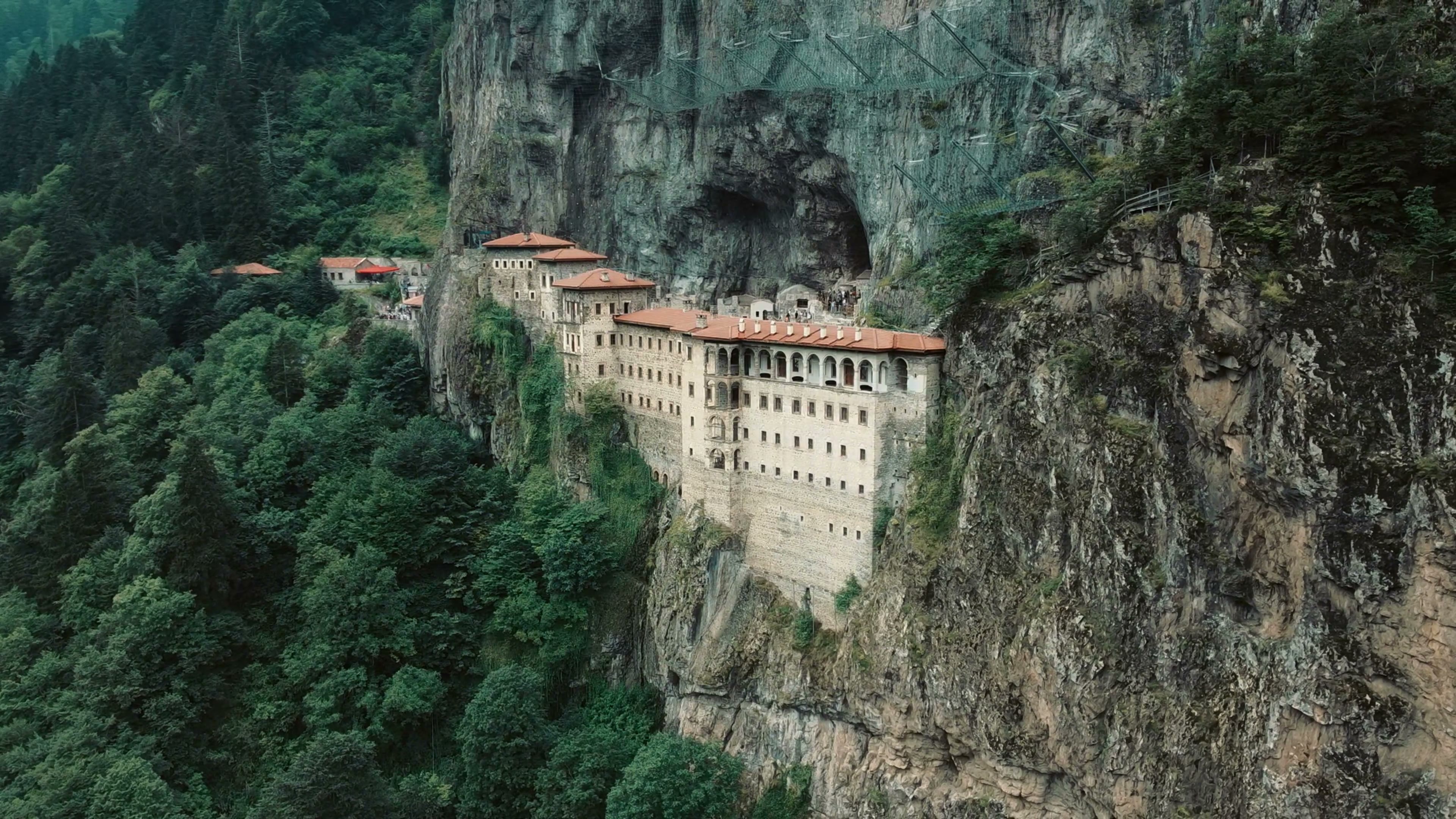
The approach to Sümela Monastery shifts the focus from urban layers to terrain. Forest, weather, slope and the cliff all affect the experience. The familiar façade is striking, yet the complex has a broader history of worship and daily life. Where entry is allowed, look for how rooms connect and how builders worked with the rock rather than imagining the monastery as a single wall.
Conservation and safety arrangements can alter the path or close sections. Plan for walking and steps, follow on-site directions, and ask about the latest accessible route if anyone in your group has mobility needs. A viewpoint can still help you understand the monastery’s position even when some rooms are unavailable. Sümela is on Türkiye’s UNESCO Tentative List; that is different from being inscribed on the World Heritage List.
Connect the two experiences thoughtfully
CREAOS Travel’s Eastern Black Sea Tour places Trabzon and Sümela on separate days of its published route. That distinction leaves space to think about each setting on its own terms. The route is a useful planning reference, but weather, transport and site access can affect the actual visit. Ask the operator for the current itinerary, inclusions and conditions for your dates.
Before choosing any Black Sea trip, decide which part matters most to you: Trabzon’s architectural history, time in the valley, or a wider regional journey. Share that priority when you enquire. The best question may be less “How many stops can I fit in?” and more “Where will I have enough time to understand what I am seeing?”
An independent travel note about CREAOS Travel's published Gaziantep guide. Confirm all current visit and tour details with the relevant venue or operator.
Image from the CREAOS Travel Gaziantep and Zeugma guide.
Gaziantep is often introduced through two appealing images: the celebrated mosaics of Zeugma and a table full of regional food. Both deserve attention, but neither tells the city's whole story. A more rewarding visit links the objects in the museum to their ancient setting, then gives today's markets and makers space to speak for themselves.
Know which Zeugma you mean
Start with a simple distinction. The Zeugma Mosaic Museum is in Gaziantep; the ancient settlement of Zeugma is a separate archaeological site near the Euphrates. A visit to the museum does not automatically include a visit to the site. The museum lets you examine protected mosaics and other objects closely. The archaeological location provides a different sense of place and distance. If seeing both matters to you, raise it as a specific itinerary question before you travel.
This distinction is particularly useful on a wider Eastern Türkiye trip. CREAOS Travel's Göbekli Tepe & Eastern Tour lists the Zeugma Mosaic Museum during its Gaziantep stage and continues to Şanlıurfa. Read the current route and ask what time can realistically be given to the city. The published itinerary is a starting point for that conversation, not a reason to assume every nearby stop is included.
Read a mosaic as part of a room
Inside the museum, it is tempting to hurry toward the portrait known as the Gypsy Girl. The image is memorable, yet a floor mosaic was once part of a building, not a framed work made for a gallery wall. Look at the larger arrangement before focusing on one face or figure. Notice the findspot, the date on the label and how the design might have worked in its original room. Those small pieces of context make the visit feel less like a sequence of photographs and more like an encounter with an ancient city.
The portrait's familiar name should not be mistaken for a certain identification of the person shown. Other galleries also deserve time: they reveal the collection's range and invite questions about conservation and the movement of objects. CREAOS Travel's Gaziantep and Zeugma guide explores the museum and its wider setting in more detail.
Give the living city its own voice
After the museum, move at a different pace through the historic market streets. Copperwork, textiles, spices and food belong to a working city. Ask whether an item is made in the workshop or sold there, and request permission before photographing people at work. There is no need to claim a direct, unbroken link between an ancient mosaic maker and a contemporary craftsperson. The connection is the attention you give to materials, skill and the people behind an object.
A meal can be part of that conversation. Rather than trying to fit every famous dish into one stop, ask about ingredients, choose what suits your group and leave time to enjoy the table. Travellers with allergies or dietary needs should check details directly. Good food writing begins with curiosity; it does not need a ranking or a promise that one restaurant represents the entire city.
Plan the pace before the checklist
If Gaziantep is one stage in a multi-city journey, decide which experience you most want to keep: a thoughtful museum visit, a market walk, a meal, or an explicitly arranged trip toward the ancient site. Ask about current opening arrangements, travel time and any changes to individual landmarks before fixing your plans. A useful day may include fewer stops than a brochure headline, but leave you with a clearer sense of both ancient Zeugma and present-day Gaziantep.
An independent reading of the CREAOS Travel İznik guide. Check current visitor information before you travel.
Start with the shape of the city
İznik makes more sense when you begin at its walls. The old gates are useful landmarks, but they are also a reminder that this lakeside town was connected to roads, trade and changing political worlds. Take time to look at the masonry before heading toward the centre. Its repairs and different surfaces resist the idea of a city frozen in one century.
Keep the councils distinct
The name Nicaea is familiar to many visitors because of the First Council in 325. Yet the İznik Hagia Sophia, later the Orhan Mosque, belongs to the story of the Seventh Ecumenical Council in 787. Treating those meetings as separate events helps the town become more than a single historical headline. At the building, look for the way successive uses sit within one place, and respect its present function and visitor guidance.
Follow colour into craft
From the central streets, the Green Mosque introduces another chapter. Its decorated minaret invites a closer look at colour, pattern and early Ottoman architecture. İznik ceramics deserve more than a quick souvenir stop: a genuine workshop conversation can reveal the care involved in forming, painting, glazing and firing. Ask whether the piece you are examining is historic, newly handmade or simply inspired by older motifs.
Finish beside the lake
After walls, buildings and tiles, the lake restores the wider landscape. A pause by the shore is an opportunity to think about why roads, settlement and cultivation converged here. It also gives you time to absorb details rather than rushing through a checklist. A practical first-visit sequence is a gate, the central Hagia Sophia area, the Green Mosque and a ceramics or museum stop, followed by the lake. Confirm access, prayer times and museum information shortly before setting out; uneven paving and seasonal heat may affect your pace.
For a fuller historical reading, see the original CREAOS Travel guide. If you prefer to plan a private visit, review the İznik (Nicaea) day tour and confirm the current itinerary and terms directly with the operator.
Cappadocia is often introduced through its famous fairy chimneys, yet the region is best appreciated as a collection of distinct landscapes and lived-in places. Valleys, rock-cut heritage, village streets and open views reward a visit planned with a little breathing room. Whether you are shaping a short stay or adding the region to a wider Türkiye itinerary, these ideas can help you make the most of your time.
Plan For The Landscape, Not Just A Checklist
Rather than trying to cover every landmark in one day, choose a few experiences that suit your interests. A scenic walk, time in a village and a visit to a heritage site each reveal a different side of Cappadocia. The distances between stops and the terrain can make a day feel fuller than it looks on a map, so leave room for pauses, viewpoints and local recommendations. If you are comparing routes, explore Creaos Travel’s Cappadocia Turquoise Tour and Cappadocia Green Tour pages for current descriptions, then confirm the precise itinerary and inclusions before booking. Travellers planning a longer stay can also browse the two-day Cappadocia tour and broader Türkiye tour packages.
Look Beyond The Iconic Silhouettes
Notice How The Valleys Change
Cappadocia’s striking formations are part of a wider volcanic landscape shaped over time by wind and water. The colours and contours shift with the light, while each valley offers its own perspective. Take time to look closely at the rock textures and the way paths pass through the terrain. A guide can add context to what might otherwise seem like a series of beautiful viewpoints. Walking is one of the most rewarding ways to experience the region, but routes vary in length, surface and difficulty. Wear supportive footwear, carry water, and ask about the conditions before setting out. If you prefer not to hike, a thoughtfully paced driving itinerary can still include panoramic stops and time in local communities.
Make Space For Local Life
Historic villages and towns are not simply backdrops. They are places where people live and work, and where traditional architecture sits alongside everyday modern life. Explore respectfully: follow local guidance, ask before photographing people, and choose locally run cafés or shops when they fit your plans. A slower visit often creates more memorable encounters than rushing from one photo stop to another.
Consider A Balloon Flight Carefully
A hot-air balloon ride is a memorable way to see the region from above, but it depends on weather and operational decisions. Availability, schedules and flight conditions can change, so treat it as an optional experience rather than the only reason for your visit. Check current details directly with the operator, allow flexibility in your itinerary, and enjoy the landscape from the ground as well: sunrise light can be beautiful from a viewpoint even when you are not flying.
Build A Balanced Day
A comfortable itinerary usually combines one or two major visits with time outdoors and a relaxed meal. Start by identifying what matters most to your group: archaeology and history, scenery, photography, village culture or an active walk. Then ask how much time is needed at each stop and whether the route involves stairs, uneven paths or extended walking. These practical details help you choose a tour or private itinerary that feels right for your pace. Families, older travellers and anyone with mobility considerations may want to discuss accessibility in advance. Cappadocia’s terrain is naturally uneven, and access can differ from one site to another. Share your needs when planning so the route can be reviewed honestly, rather than assuming every stop will be suitable.
Useful Planning Tips
Pack layers: temperatures can vary during the day and by season. Check a current forecast shortly before departure.
Bring essentials: comfortable shoes, sun protection and drinking water make outdoor stops easier.
Keep plans flexible: weather and local operating conditions may affect some activities. Confirm current arrangements with your provider.
Ask about details: verify meeting points, transport, walking requirements, entrance arrangements and what is included in your chosen tour.
Travel thoughtfully: respect protected areas, local customs and residents’ privacy, and leave natural and historic places as you found them.
Make Cappadocia Your Own
The region’s appeal lies in its variety: remarkable geology, layers of history and a strong sense of place. You do not need to see everything to leave with a meaningful impression. Choose experiences that match your interests, allow time to take in the scenery, and make the practical arrangements clear before you travel. Ready to plan your visit? Compare the current Cappadocia tour options or browse tailor-made Türkiye itineraries, then contact Creaos Travel to discuss a route that fits your schedule and preferences.